German
  Dutch
Dutch 
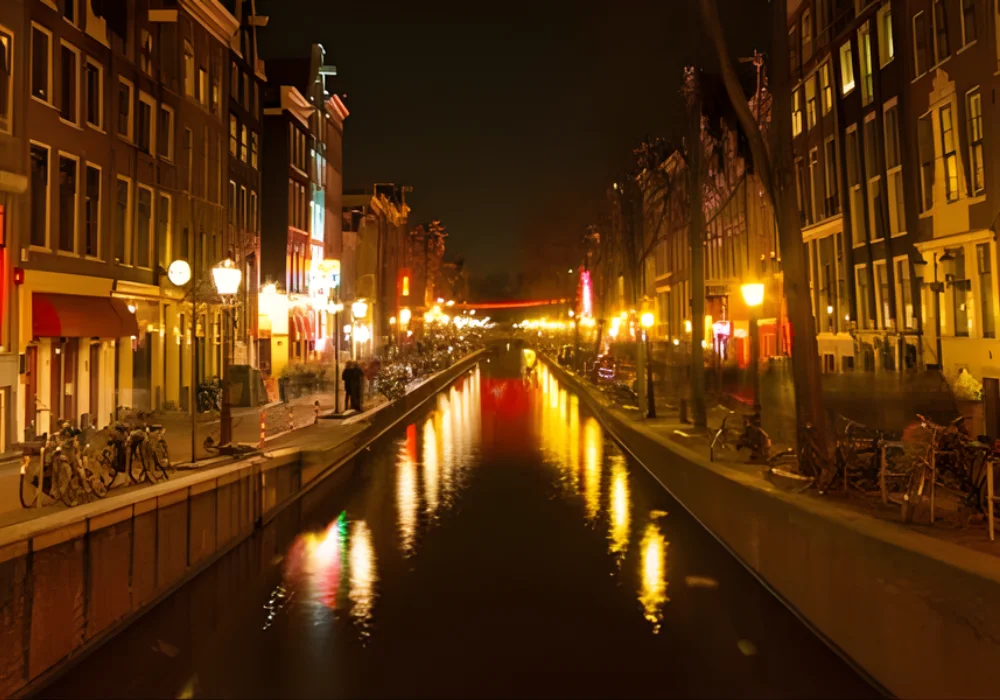
Amsterdam Red Light District Route: A Phenomenon You Won’t Forget
Of all the possible routes, the Amsterdam Red Light District Route is one of the most extraordinary. It’s a heady mix of fascinating history, controversial scenes, and spectacular perspectives from the water. The Amsterdam Red Light District is truly one of a kind — not just in the Netherlands, but on a global scale. Every year, crowds of tourists from every corner of the world flock here, if only to snap a quick photo.
If a great route starts big and ends big, then the Red Light District Route is nothing short of exceptional. There isn’t a dull moment.
Haven’t arranged a boat yet? We highly recommend our drinks cruise for this route — we guarantee a drinks experience you’ll never forget. Prefer something different? Browse our full range of boat trips and check out our rent a sloop Amsterdam page. Now, let’s get the route started!
A Look at the Red Light District Route
You can start the Red Light District Route from several different boarding points, but for this guide we’ve started at the Rokin.
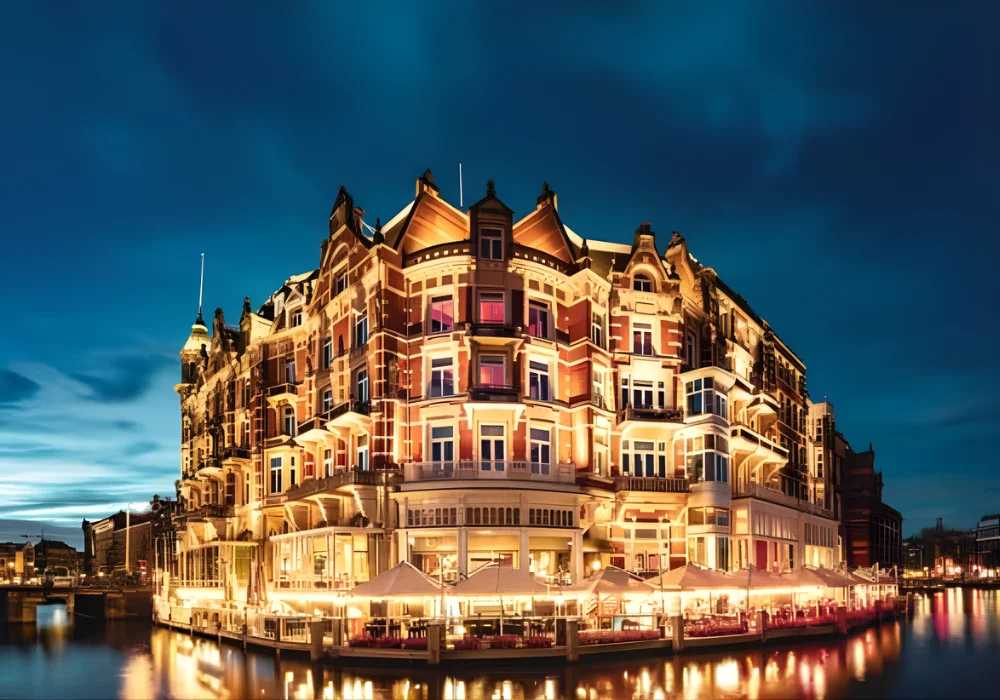
The route begins at the Rokin, then quickly turns left past Hotel De L’Europe toward the Red Light District. The route passes through the calm stretch of the Kloveniersburgwal, gliding past the Stopera (Amsterdam’s city hall and opera house) and the statue of Spinoza. From there, it heads toward the Geldersekade — and that’s where the real spectacle begins. You turn the corner, and the Red Light District is impossible to miss. At this point, there is something to see everywhere you look! As things quiet down along the quayside, you’ll be approaching the Lange Brug, which crosses back over the Rokin — returning you to your starting point.
Note: The Oudezijds Voorburgwal is a one-way waterway. The best approach is from the Rokin, going clockwise.
Below, we’ve highlighted some of the standout moments along this route.
The World-Famous Red Light District
De Wallen. The Red Light District. 1012. De Nieuwmarktbuurt. Oud Mokum. There are too many names to count — but point to the Red Light District on a world map and almost anyone will know exactly where you mean.
Few places in the world inspire such curiosity and fascination. With the magnificent Oude Kerk at its center, the Red Light District is a place of wild contrasts — bombastic yet mundane all at once.
Bombastic, because of the crowds of tourists gawking at the scantily clad women in the windows and the blaze of neon lights. And yet, local children run past, families walk by, and people head to work — completely unfazed, more concerned with navigating the bicycle traffic and the sound of rolling suitcases than anything else. The banality of everyday life has never been so visible.
De Wallen sits at the heart of the oldest part of the city, dating back to the 13th century when sailors returning from long voyages at sea were in need of female company. The Red Light District spans several blocks to the south of the Oude Kerk and is intersected by a network of canals.
The later the hour, the busier it gets — and the darker it gets, the more vivid the red glow above the neighborhood becomes. The area also includes a number of sex shops, sex theaters with live shows, peep shows, a sex museum, a cannabis museum, and several coffeeshops selling marijuana.
Oude Kerk
The Oude Kerk is the oldest building in Amsterdam, located right in the heart of the city’s celebrated historic center. Through its programming, the Oude Kerk creates connections between heritage and art, between past and present — offering visitors space for contemplation and wonder.
The church presents art projects that align with its cultural and historical significance while enriching the contemporary art scene. The Oude Kerk collaborates extensively with both national and international partners.
There’s also a small garden where you can enjoy a coffee and a slice of apple pie — a perfect refuge from the chaos surrounding it.
Hotel De L’Europe
Located in the heart of Amsterdam, within walking distance of the 19th-century Museumplein and its world-class institutions — including the Rijksmuseum and the Van Gogh Museum — De L’Europe has long been synonymous with Amsterdam’s rich history.
Since its official opening in 1896, De L’Europe has been the preferred choice of Amsterdam’s elite, and continues to attract some of the world’s most recognizable names to this day.
The hotel’s distinctive décor and cultural heritage make it truly one of a kind — featuring paintings by several Dutch Masters and the prized private collection of Alfred “Freddy” Heineken.
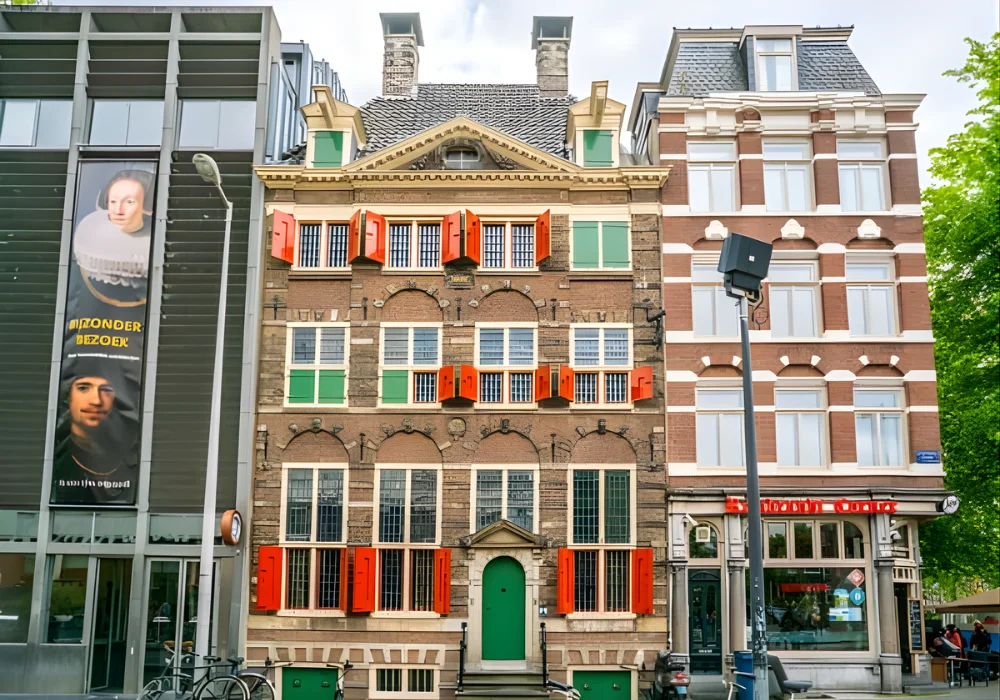
Museum Het Rembrandthuis
Tucked into the heart of the old Jewish Quarter, just around the corner from Waterlooplein, stands a stately house where many great masterpieces first came to life.
Behind the red shutters and green front door lie the rooms where Rembrandt van Rijn — the Netherlands’ greatest 17th-century painter — lived and worked for nearly 20 years. He loved here and he lost here. Rembrandt’s legacy is nowhere more alive than in these rooms.
Today, the house is open to the public: a rare opportunity to step directly into the world of one of the most celebrated painters in history.
Want to know more about Amsterdam? Read our blogs about Amsterdam’s Canals and Sailing in Amsterdam.
While supplies last
Especially for you
Read our blogs and find out everything about the best outings and sailing routes